

Every Ramzan, around the second week, a familiar pattern shows up in the clinic.
A school teacher and mother of three sits across the table looking genuinely worn out. Not spiritually — physically. “Bhai, Sehri mein sirf roti khati hoon kyunki bhook nahi lagti, aur Iftar pe bohot zyada kha leti hoon. Phir dopahar tak energy bilkul khatam ho jati hai.”
She is not describing a unique problem. She is describing the most common Ramadan fasting experience in Pakistan — and the reason so many people spend the second half of their fast foggy, irritable, and counting down the minutes rather than being present in ibadah.
Maintaining steady energy levels during Ramadan comes down to two meals. The Sehri meal that most people either skip or eat carelessly because appetite is low at 3am. And the Iftar meal that turns into a full feast after 14 to 16 hours of hunger. Both extremes — under-eating at Sehri and overeating at Iftar — produce the same result: blood sugar instability, mid-afternoon brain fog, post-Iftar food coma, and exhaustion that makes taraweeh feel like a burden instead of a gift.
The fix is not complicated. It is a matter of understanding what the body actually needs across a long fast — and making two meals count properly.
Why Energy Crashes Happen During Ramadan Fasting
The body runs on glucose during waking hours and draws on stored glycogen during fasting periods. When the Sehri meal is too small or nutritionally empty — white roti, a cup of chai, nothing at all — those glycogen stores run out well before Zuhr. By early afternoon, the brain, which is particularly sensitive to glucose availability, starts signalling distress. That is when the fog arrives. The headache. The irritability that has nothing to do with the fast itself.
Overeating at Iftar creates the opposite but equally damaging problem. After 14 to 16 hours of fasting, the digestive system is quiet and blood sugar is low. Flooding it immediately with fried samosas, pakoras, sugary drinks, and biryani causes blood sugar to spike sharply. Insulin floods the system to bring it back down. Two to three hours later, the crash arrives — heavier and more exhausting than the afternoon dip.
The goal of a proper Ramadan diet is not a full stomach at Iftar or a forced meal at Sehri. It is steady fuel — delivered through slow-digesting foods, adequate protein, healthy fats, and consistent hydration — that keeps energy levels during Ramadan stable from Fajr to Isha.
1. Never Skip or Under-Eat at Sehri — Even Without Appetite
This is the single most common mistake seen during Ramadan fasting consultations. “Bhook nahi lagti toh chhor deta hoon” is a sentence that almost guarantees a difficult afternoon.
Skipping Sehri is the dietary equivalent of starting a long drive with the fuel gauge on empty. The body will manage for a while — burning fat for fuel as glycogen depletes — but by early afternoon the tank is genuinely empty and performance suffers in every way.
The appetite is low at 3am because the body is in a natural sleep and recovery state. That does not mean food is not needed. It means the Sehri meal needs to be practical and easy to eat rather than elaborate.
What actually works:
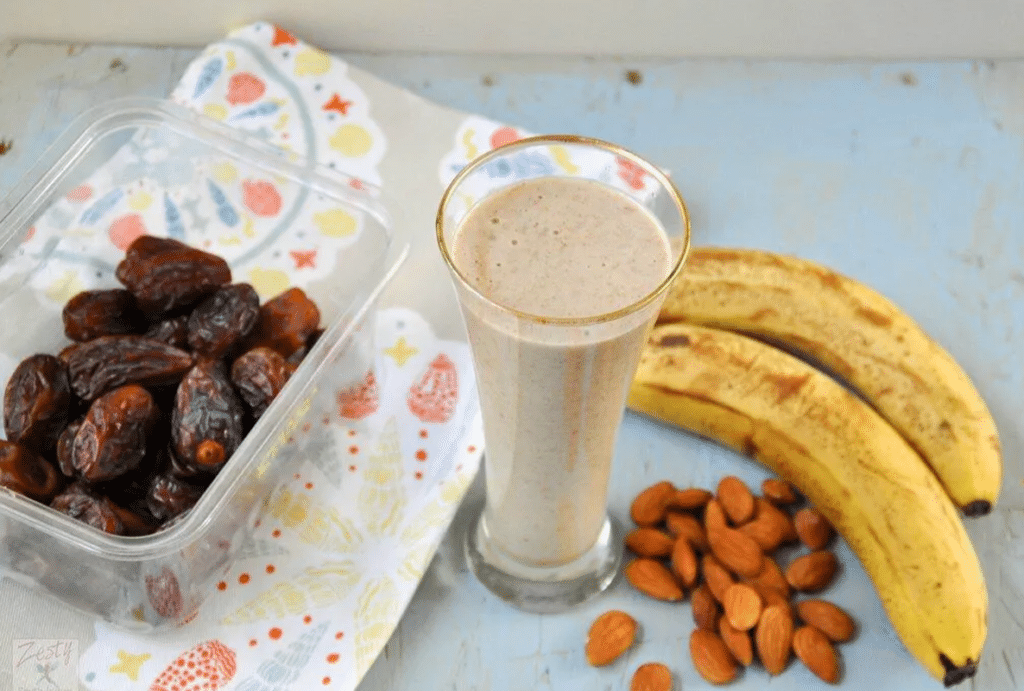
- Oats cooked in milk with a banana and a small handful of almonds — slow-digesting, filling, and easy to prepare half-asleep
- Two boiled eggs with one whole wheat roti and sliced cucumber — protein and complex carbs that last for hours
- Greek-style dahi with chia seeds and two to three dates — light, nutritious, and genuinely effective
A client who had skipped Sehri for years switched to a small oats bowl. Her exact words after the first week: “Pehli baar Ramzan mein dopahar tak fresh feel kiya.” One meal. One change.
2. Start Iftar Slowly — Not with Fried and Sugary Foods
The classic Pakistani Iftar table is genuinely beautiful — samosas, pakoras, chaat, Rooh Afza, khajoor, and then biryani or korma to follow. Enjoyed mindfully in small portions after a proper break, most of these foods are fine. The problem is the order and the speed.
Overeating at Iftar typically follows this sequence: break fast with three or four samosas, a glass of Rooh Afza, a few pakoras, then sit down for a full plate of biryani with korma on the side. Everything enters a digestive system that has been quiet for 14 hours, all at once, at high speed. The blood sugar spike is significant. The crash two hours later is worse.
The Iftar sequence that preserves energy levels during Ramadan:
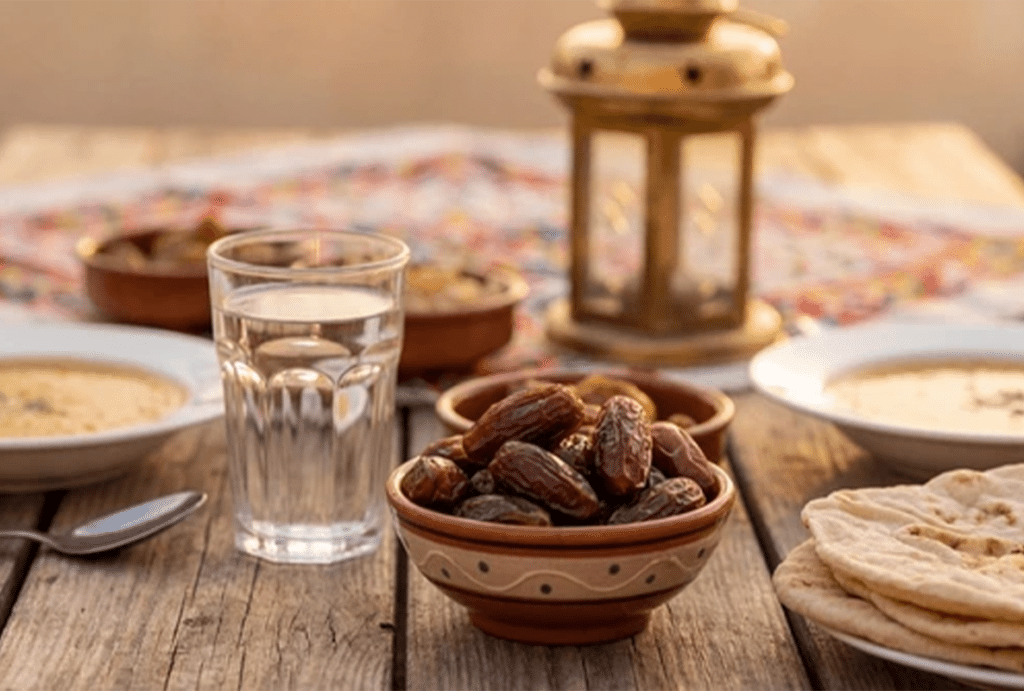
- Break the fast with one to two dates and plain water — this is sunnah and nutritionally perfect, providing quick natural glucose without overloading the system
- Sit for Maghrib prayer and give the digestive system 10 to 15 minutes to wake up
- Return to a main plate that is half vegetables or salad, one quarter protein (chicken, fish, daal), one quarter complex carbs (one roti or small portion of brown rice)
- Save any sweet for the very end, in a genuinely small amount
This sequence prevents the post-Iftar food coma that so many Pakistani families treat as inevitable. It is not inevitable — it is a direct result of meal order and portion size.
3. Choose Slow-Digesting Foods at Both Meals
Fast-digesting foods — white roti, maida paratha, mithai, packaged juices — cause rapid blood sugar spikes followed by equally rapid crashes. They feel satisfying in the moment and exhausting within the hour.
Slow-digesting foods do the opposite. They release glucose gradually, keeping energy levels during Ramadan stable across the long fast rather than delivering a spike and abandoning the body to a crash.
Best choices for Pakistani homes:
- Complex carbohydrates: oats, daal, chickpeas, brown rice, whole wheat roti
- Protein: eggs, chicken, fish, daal, dahi — the foundation of every Sehri meal and Iftar meal
- Healthy fats: a small amount of ghee, a handful of nuts, seeds — these slow digestion and extend satiety
- Fibre: sabzi at every meal — bhindi, tori, palak, gajar, any vegetable available
The plate formula used in consultations: half vegetables, one quarter protein, one quarter complex carbs. Simple. Repeatable. Genuinely effective for maintaining energy through a full day of Ramadan fasting.
4. Hydrate Strategically — Not Just at Iftar
Most people drink almost nothing during the day — which is unavoidable during the fast — and then compensate by drinking large amounts at Iftar. The problem is that the body cannot store that hydration effectively. By the following afternoon, dehydration is contributing as much to fatigue as any food choice.
What works for sustained energy levels during Ramadan:
- Sip water consistently from Iftar to bedtime — aim for 1.5 to 2 litres during this window
- At Sehri, drink 500 to 700ml of water alongside hydrating foods — cucumber, watermelon, plain dahi
- Avoid very salty or very sweet drinks at either meal — they increase thirst and disrupt fluid balance rather than solving it
A client started carrying a water bottle during taraweeh prayers and reported it was the single biggest improvement in her afternoon energy across the entire month.
5. Add Natural Electrolytes and Magnesium-Rich Foods
Ramadan fasting depletes sodium, potassium, and magnesium — three minerals directly linked to energy, muscle function, and mental clarity. When these drop, fatigue, cramps, and headaches follow even when food intake is otherwise reasonable.
Easy additions to the Ramadan diet:
- Potassium: banana and dates at Sehri, coconut water at Iftar
- Magnesium: almonds, spinach, pumpkin seeds — a small handful at either meal
- Sodium: a small pinch of black salt in water or lassi — replaces what is lost during the fast without overloading
These small additions consistently reduce the “weak feeling” that many people experience by Zuhr time and attribute entirely to the fast itself.
Frequently Asked Questions About Energy Levels During Ramadan
Why does afternoon fatigue hit so hard during Ramadan fasting?
Almost always a combination of under-eating at Sehri and blood sugar instability from the previous Iftar meal. When the Sehri meal is skipped or nutritionally empty, glycogen stores run out well before afternoon prayer.
Should Sehri be forced even without appetite?
Yes — even a small, balanced meal is significantly better than nothing. Start with dates and water to gently wake up appetite, then add something light but nutritious. The afternoon will feel completely different.
What is the best Iftar meal for steady energy?
Start with dates and water, pause for Maghrib, then build a plate around salad or soup, protein, and complex carbs. Keep fried items minimal and sweets for the very end in small portions. This sequence prevents overeating at Iftar and the crash that follows.
Does coffee or chai during Ramadan affect energy levels?
In moderation and paired with food, caffeine is fine. The problem arises when chai replaces proper Sehri nutrition — the caffeine provides a temporary lift followed by a deeper crash. Always eat before drinking chai at Sehri.
How much water is needed during Ramadan fasting?
Aim for 2.5 to 3.5 litres between Iftar and Sehri. Sip steadily throughout the evening rather than drinking large amounts at once — the body absorbs it more effectively this way.
Is post-Iftar sleepiness normal?
Mild tiredness after breaking a long fast is normal. Heavy, debilitating sleepiness that prevents evening prayers or family time is a sign of overeating at Iftar — too much food, too fast, with too many simple carbohydrate.

Ready to Feel Genuinely Energised Throughout Ramadan?
Ramadan should feel spiritually uplifting and physically manageable — not like a daily battle against exhaustion. Balancing the Sehri meal and Iftar meal properly is the most practical, highest-impact change available for energy levels during Ramadan.
📞 Call/WhatsApp: +92 300 0172509 📧 Email: hamzathedietitian@gmail.com 🌐 Visit: hamzathedietitian.com
Personalised meal plans, Ramadan diet guidance, and ongoing support built around Pakistani food culture and individual health needs. Book a consultation today.
Related reads:
Final Thoughts: Steady Energy Levels During Ramadan Are Completely Achievable
Steady energy levels during Ramadan come from breaking the cycle of under-eating at Sehri and overeating at Iftar — not from willpower, not from supplements, and not from suffering through the afternoon crash as though it is simply part of fasting.
Key takeaways:
- A balanced, nutrient-dense Sehri meal — even a small one — changes the entire afternoon
- Start Iftar slowly with dates and water, then build the plate around protein and fibre first
- Slow-digesting foods at both meals are the foundation of stable energy during Ramadan fasting
- Consistent hydration between Iftar and Sehri prevents the dehydration fatigue that compounds everything else
- Small additions of natural electrolytes and magnesium make a measurable difference by Zuhr
Ramadan is about so much more than managing hunger. It is about presence, peace, and spiritual strength. Fuel the body properly and those qualities become far more accessible throughout every day of the month.
Ramzan Mubarak — stay strong and stay energised.
Hamza The Dietitian Lahore — helping Pakistani families thrive through Ramadan and beyond.