
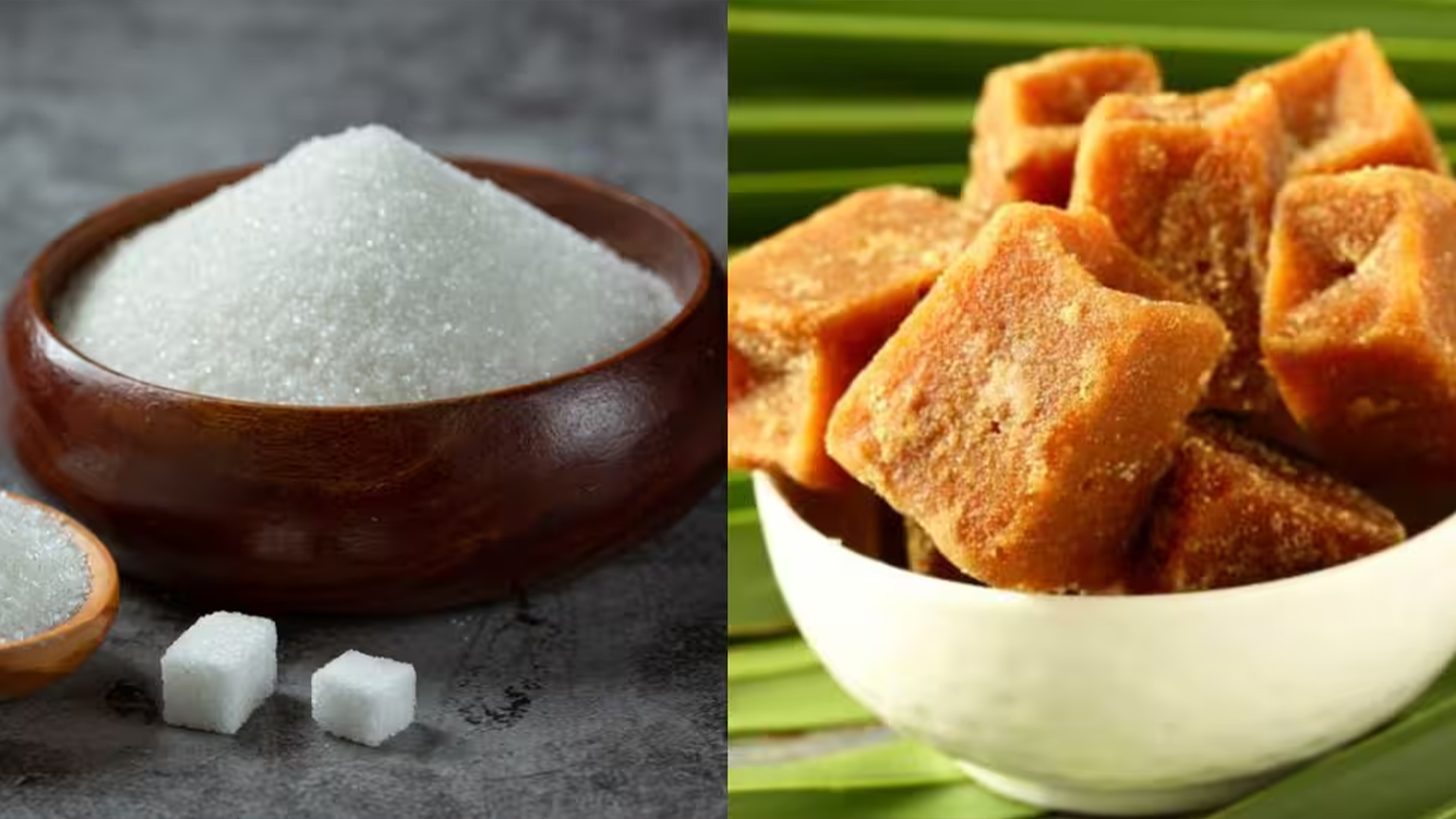
“Bhai, gur better hai ya cheeni? Diabetes hai toh kya sirf gur kha sakte hain?”
This question comes up almost daily — in the clinic, in WhatsApp messages, in comments on social media. And the answer that most people expect is simple: jaggery good, white sugar bad. Natural versus processed. Traditional versus industrial.
The reality of sugar vs jaggery is more honest and more nuanced than that — and understanding it properly matters especially for the millions of Pakistani families managing diabetes, prediabetes, or simply trying to eat better without giving up the flavours that make our food worth eating.
Both sugar and jaggery come from the same sugarcane plant. Both raise blood sugar levels. Both cause problems when overused. The real differences lie in nutrient content, glycemic index, and how they behave in the body when portion size and food pairing are taken into account. Here is the complete, honest comparison — including who should choose which, and practical ways to use either without guilt or dangerous spikes.
Where Sugar and Jaggery Actually Come From
Both sweeteners begin as sugarcane juice. What happens after that is where they diverge significantly.
White sugar goes through heavy industrial processing. The juice is clarified, boiled, crystallised, centrifuged, bleached with chemicals or carbon, and refined until nothing remains except pure sucrose. Every mineral, every trace nutrient — gone.
Jaggery (gur) is made the traditional way. Sugarcane juice is boiled in open pans until it thickens, then poured into moulds and left to solidify. No bleaching, no heavy refining, no chemical processing. Because it skips those stages, it retains some of the minerals naturally present in sugarcane.
That difference in processing is what gives jaggery a genuine but modest nutritional edge over white sugar. The key word is modest — and social media has been significantly overstating it for years.
Nutritional Comparison: Sugar vs Jaggery Per 100g
When patients ask about sugar vs jaggery, this is the actual side-by-side comparison worth looking at:
| Nutrient | White Sugar | Jaggery |
| Calories | 387 kcal | 383 kcal |
| Carbohydrates | 100g | 95–97g |
| Sucrose | 100% | 65–85% |
| Iron | 0.1 mg | 10–11 mg |
| Calcium | 1 mg | 70–85 mg |
| Potassium | 2 mg | 20–90 mg |
| Fibre | 0g | 0.5–1g |
Jaggery has meaningfully more iron and minerals because it is less refined. But those mineral amounts are still small compared to what one bowl of palak or a handful of almonds delivers. The idea that switching to jaggery will address iron deficiency or significantly improve nutrition is an overstatement. What it does do is add a small amount of genuine nutrition that white sugar provides none of.
Glycemic Index and Blood Sugar Impact — The Part That Actually Matters
This is where most sugar vs jaggery conversations go wrong.
- White sugar: GI approximately 65 to 70 — causes a fast, significant spike in blood sugar levels
- Jaggery: GI approximately 55 to 65 — slightly slower rise, but still substantial and still a problem in larger portions
In clinical practice with diabetic patients, both cause noticeable blood sugar spikes when eaten in similar amounts. Jaggery is not safe for uncontrolled diabetes. The glycemic index difference is real but marginal — and portion size overrides it entirely.
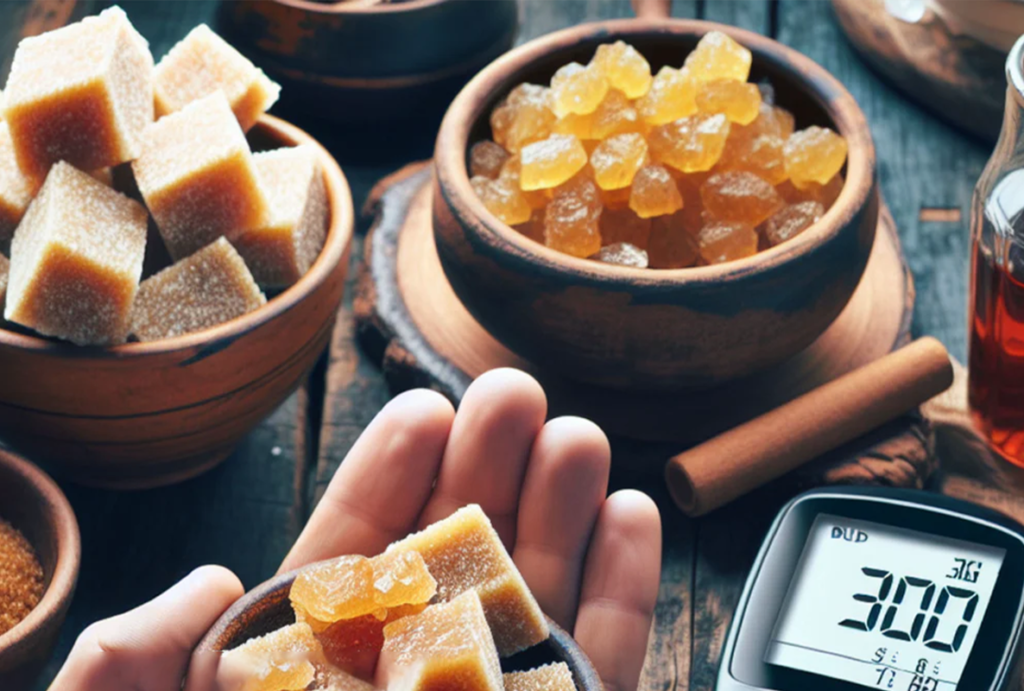
A type 2 diabetic client on metformin was eating 30g of jaggery after meals every day, convinced it was a healthy choice. Post-meal readings sat consistently at 220 to 250 mg/dL. After switching to a maximum of 5g paired with protein and fibre, readings dropped to 140 to 160 mg/dL. The lesson is not that jaggery is dangerous — it is that quantity and pairing matter far more than the natural sweetener label.
Health Benefits: Sugar vs Jaggery — The Honest View
White sugar provides instant energy through rapid glucose delivery to the brain and muscles. It is cheap, easy to measure, and dissolves easily. Beyond that, it offers nothing — pure empty calories with zero nutritional contribution.
Jaggery provides small but real amounts of iron, potassium, and magnesium that support energy, reduce fatigue, and help slightly with anaemia. It has trace fibre — barely noticeable in practice but technically present. It also has a beautiful, complex traditional flavour that pairs naturally with desi foods in a way white sugar never does.
The honest assessment: if the daily diet already includes enough dal, sabzi, nuts, and fruit, the extra minerals in jaggery will not dramatically change anything. But they are real, they are absent in white sugar, and for people whose diets are already marginal in micronutrients, the difference adds up over time.
Who Should Choose Which? Practical Recommendations
Healthy adults without diabetes: Either is fine in genuine moderation. Jaggery adds a little nutrition and a lot of traditional flavour — a small piece with roti or gud ki chai occasionally is perfectly reasonable.
Prediabetes or controlled diabetes: Limit both significantly. If choosing between the two, small amounts of jaggery — 5 to 10g per day maximum — paired consistently with fibre and protein is marginally better than white sugar in equivalent amounts.
Uncontrolled diabetes or significant insulin resistance: Avoid both as much as practically possible. Stevia, monk fruit, or very small amounts of fresh dates are better alternatives that do not produce the same blood sugar response.
5 Practical Ways to Use Jaggery Wisely in Pakistani Meals
For those who want to enjoy jaggery without causing blood sugar problems, portion and pairing are everything:
- Replace sugar in chai with half to one teaspoon of jaggery per cup — start with the smaller amount and adjust
- Drizzle one teaspoon of melted jaggery over plain dahi with fresh fruit as an occasional dessert
- Add a small piece to dal or kadhi for natural sweetness — a traditional technique that works beautifully
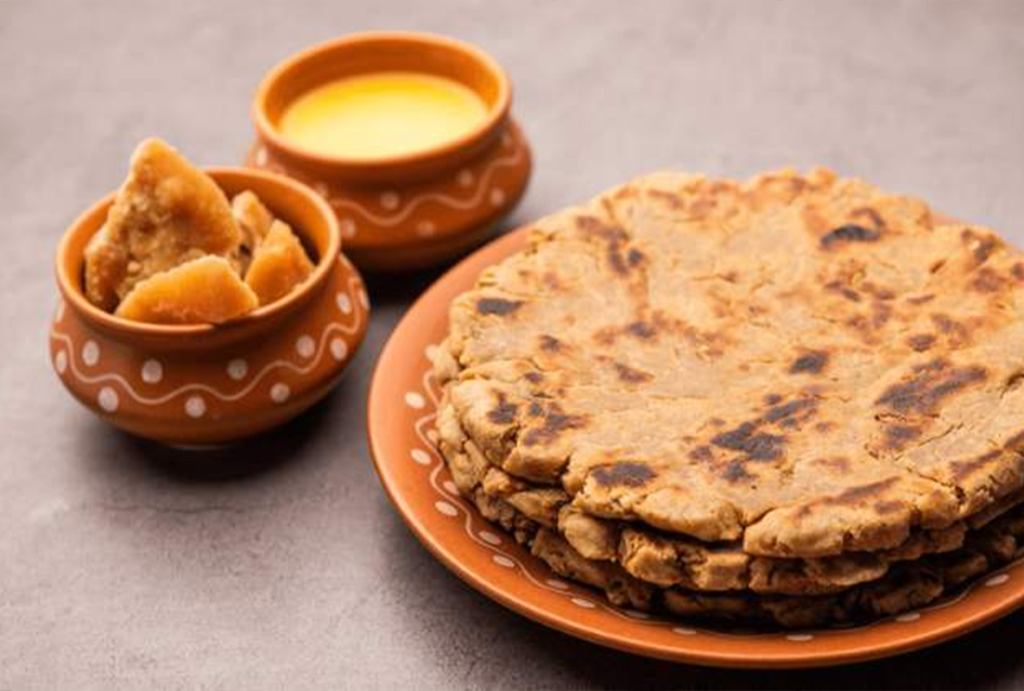
- Make gud ki roti once a week as a treat rather than a daily staple
- Mix one teaspoon of jaggery with a pinch of haldi in warm milk at night — a genuinely comforting and nutritionally reasonable bedtime drink
Even “healthy” jaggery accumulates quickly. Portion control is not optional — it is the entire point.
Frequently Asked Questions About Sugar vs Jaggery
Is jaggery genuinely healthier than sugar?
It has slightly more minerals and a marginally lower glycemic index, making it the better choice between the two when used in the same small amounts. However, both raise blood sugar levels significantly when portions increase. Moderation matters far more than which one is chosen.
Can diabetics eat jaggery?
In very small amounts — 5 to 10g per day maximum — paired with fibre and protein, yes. Many diabetic patients do better avoiding both entirely and using alternatives like stevia instead. Individual response varies and is worth monitoring.
Does jaggery support weight loss?
Not meaningfully. The calorie content is almost identical to white sugar. The trace iron and potassium provide health benefits but have no direct impact on weight. Treating jaggery as a weight loss food is a misunderstanding of what it offers.
Which has the lower glycemic index — sugar or jaggery?
Jaggery sits at approximately 55 to 65, white sugar at 65 to 70. The difference is real but small — and becomes irrelevant when jaggery is consumed in large portions. Portion size determines the actual blood sugar impact more than the glycemic index number.
Is brown sugar better than white sugar or jaggery?
No — brown sugar is white sugar with molasses added back after refining. Same calories, same blood sugar spike, minimal additional nutrients. It occupies a marketing middle ground without the genuine traditional credentials of real jaggery.
Should the switch to jaggery be complete?
Not necessary and not the most important change available. Use whichever is preferred in genuinely small amounts and focus on the overall quality of the diet — that decision will matter far more than the choice between these two sweeteners.
Ready to Make Smarter Sweet Choices?
Sugar vs jaggery is not a battle between good and evil. It is a question of how much, how often, and what the sweetener is paired with. Getting those three things right matters infinitely more than which one ends up in the chai.
📞 Call/WhatsApp: +92 300 0172509 📧 Email: hamzathedietitian@gmail.com 🌐 Visit: hamzathedietitian.com
Personalised meal plans, real ongoing support, and practical guidance built around Pakistani food culture and individual health needs. Book a consultation today.
Related reads:
Final Thoughts on Sugar vs Jaggery
Sugar vs jaggery comes down to small but real differences in nutrients and glycemic index — with jaggery holding a genuine but modest advantage. Neither is a free pass. Both raise blood sugar levels meaningfully when overused.
Key takeaways:
- Jaggery has trace minerals that white sugar does not — iron, calcium, potassium
- Glycemic index is similar — portion size determines the actual impact on blood sugar
- Use either in small amounts — 5 to 10g per day maximum
- Always pair with fibre, protein, and fat to reduce the blood sugar spike
- The overall quality of the daily diet matters far more than the choice between these two sweeteners
Health is not built by one spoonful of the right sweetener. It is built by consistent daily habits across every meal. Choose what genuinely works, keep the portions small, and keep moving forward.
Stay sweet the smart way.
Hamza The Dietitian Lahore — helping Pakistan make balanced, realistic choices every day.